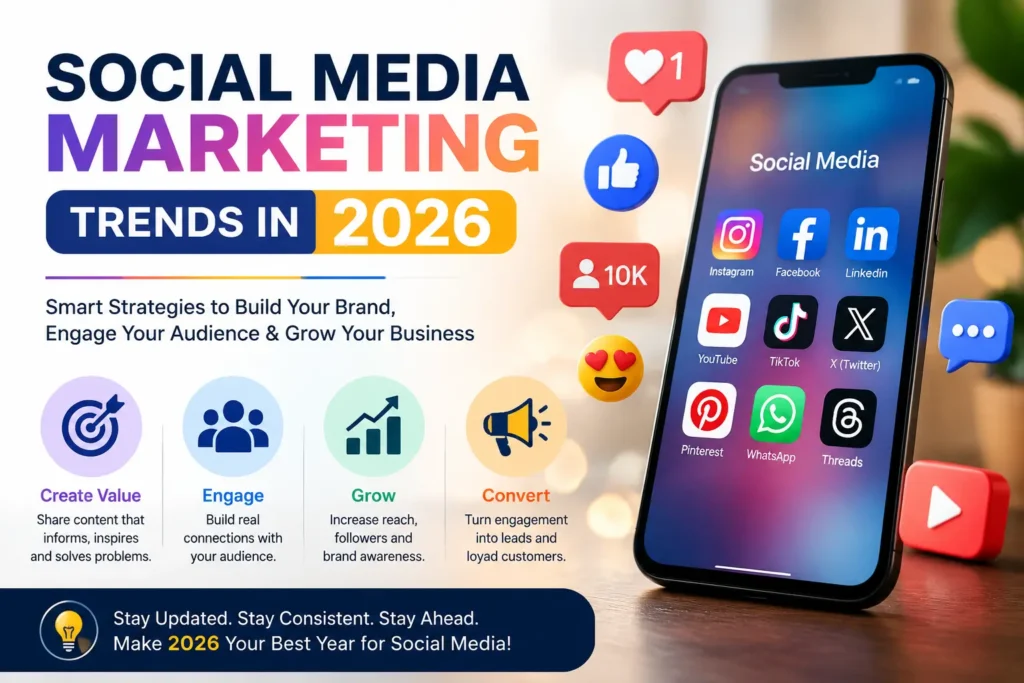
Social media has evolved far beyond simply posting images and videos. In 2026, successful brands are using social media to build trust, engage with customers, generate qualified leads, and increase sales through meaningful content and data-driven strategies.
With billions of active users across platforms like Facebook, Instagram, LinkedIn, YouTube, and X (formerly Twitter), businesses that invest in the right social media marketing techniques can significantly improve their online presence and stay ahead of the competition.
Whether you’re a startup, local business, eCommerce brand, or established company, these proven social media marketing trends will help you grow your audience and achieve measurable results.
1. Focus on Valuable Content Instead of Promotional Posts
Today’s audiences prefer educational, entertaining, and informative content over constant sales pitches.
Create content that:
- Solves problems
- Answers questions
- Shares industry insights
- Educates your audience
- Inspires action
Following the 80/20 rule—80% value-driven content and 20% promotional content—helps build trust and long-term engagement.
2. Short-Form Videos Continue to Dominate
Short videos remain one of the highest-performing content formats across all major platforms.
Use short videos for:
- Product demonstrations
- Customer testimonials
- Behind-the-scenes content
- Tips and tutorials
- Frequently asked questions
- Company updates
Videos that are engaging and concise tend to receive higher reach and better audience retention.
3. Build a Strong Brand Identity
Consistency builds recognition.
Maintain a unified identity across all platforms by using:
- Consistent brand colors
- Professional logo
- Similar typography
- Brand voice
- High-quality visuals
A recognizable brand is more likely to gain followers and customer trust.
4. Prioritize Community Engagement
Social media is about conversations, not just publishing content.
Actively:
- Reply to comments
- Answer direct messages
- Participate in discussions
- Encourage user-generated content
- Ask questions
Higher engagement signals can improve visibility and strengthen customer relationships.
5. Optimize Every Social Profile
Your profile serves as your digital storefront.
Ensure it includes:
- Professional profile image
- Keyword-rich bio
- Website link
- Contact information
- Business hours (if applicable)
- Call-to-action
A complete profile increases credibility and improves discoverability.
6. Use AI to Improve Content Creation
Artificial intelligence has become a valuable tool for marketers.
AI can assist with:
- Content ideas
- Caption writing
- Hashtag suggestions
- Video editing
- Content scheduling
- Audience analysis
However, always review and personalize AI-generated content to maintain authenticity.
7. Create Platform-Specific Content
Every social platform has a unique audience and content style.
For example:
- Reels
- Stories
- Carousel posts
- Community posts
- Events
- Videos
- Professional insights
- Industry updates
- Thought leadership
YouTube
- Tutorials
- Product reviews
- Educational videos
Tailoring your content improves engagement and performance.
8. Collaborate with Influencers
Influencer marketing continues to be highly effective when partnerships are relevant and authentic.
Work with:
- Industry experts
- Local influencers
- Micro-influencers
- Brand ambassadors
Their recommendations can help expand your reach and build trust among potential customers.
9. Leverage Paid Social Advertising
Organic reach alone may not be enough to achieve rapid growth.
Paid advertising on platforms like Facebook, Instagram, and LinkedIn allows businesses to:
- Reach targeted audiences
- Generate leads
- Promote products
- Increase website traffic
- Drive conversions
Even a modest advertising budget can produce excellent results with proper targeting.
10. Encourage User-Generated Content
Customers trust real experiences more than traditional advertising.
Encourage your audience to:
- Share product photos
- Post reviews
- Tag your business
- Create testimonials
User-generated content builds authenticity and strengthens your online reputation.
11. Monitor Social Media Analytics
Track performance regularly using platform insights.
Important metrics include:
- Reach
- Impressions
- Engagement Rate
- Click-Through Rate
- Follower Growth
- Website Traffic
- Conversions
Understanding these metrics helps refine your strategy and improve results.
12. Maintain a Consistent Posting Schedule
Consistency is key to social media success.
Create a content calendar and post regularly without overwhelming your audience.
A consistent schedule keeps your brand visible and encourages long-term engagement.
13. Use Hashtags Strategically
Relevant hashtags improve discoverability.
Best practices include:
- Use niche hashtags
- Include location-based hashtags
- Avoid excessive hashtags
- Research trending topics
Quality matters more than quantity.
14. Build Trust Through Customer Reviews
Positive reviews influence purchasing decisions.
Encourage satisfied customers to leave reviews on:
- Industry-specific platforms
Respond professionally to both positive and negative feedback to demonstrate your commitment to customer satisfaction.
15. Stay Updated with Emerging Trends
Social media evolves rapidly.
Stay informed about:
- Algorithm updates
- New platform features
- Content trends
- AI tools
- Consumer behavior
Businesses that adapt quickly often gain a competitive advantage.
Common Social Media Marketing Mistakes
Avoid these common mistakes:
- Posting inconsistently
- Ignoring comments and messages
- Using low-quality visuals
- Publishing only promotional content
- Buying fake followers
- Ignoring analytics
- Posting the same content across every platform without customization
- Failing to define a target audience
- Overusing hashtags
- Neglecting profile optimization
Frequently Asked Questions
Which social media platform is best for businesses?
The best platform depends on your target audience. Instagram and Facebook are excellent for consumer brands, LinkedIn is ideal for B2B businesses, and YouTube works well for educational and long-form video content.
How often should I post on social media?
Quality is more important than quantity. Posting consistently several times per week with valuable content is generally more effective than publishing daily without a strategy.
Is paid advertising necessary?
Organic content builds trust, while paid advertising accelerates growth and reaches a broader, targeted audience. Combining both approaches often delivers the best results.
How can I measure success?
Monitor engagement, website traffic, lead generation, conversions, follower growth, and return on investment using platform analytics and tools like Google Analytics.
Final Thoughts
Social media marketing in 2026 is centered around authenticity, valuable content, meaningful engagement, and data-driven decision-making. Businesses that consistently provide value, interact with their audience, and adapt to changing trends will build stronger relationships and achieve sustainable growth.
By implementing these proven strategies, you can increase brand awareness, generate qualified leads, and create a loyal online community that supports your business for years to come.