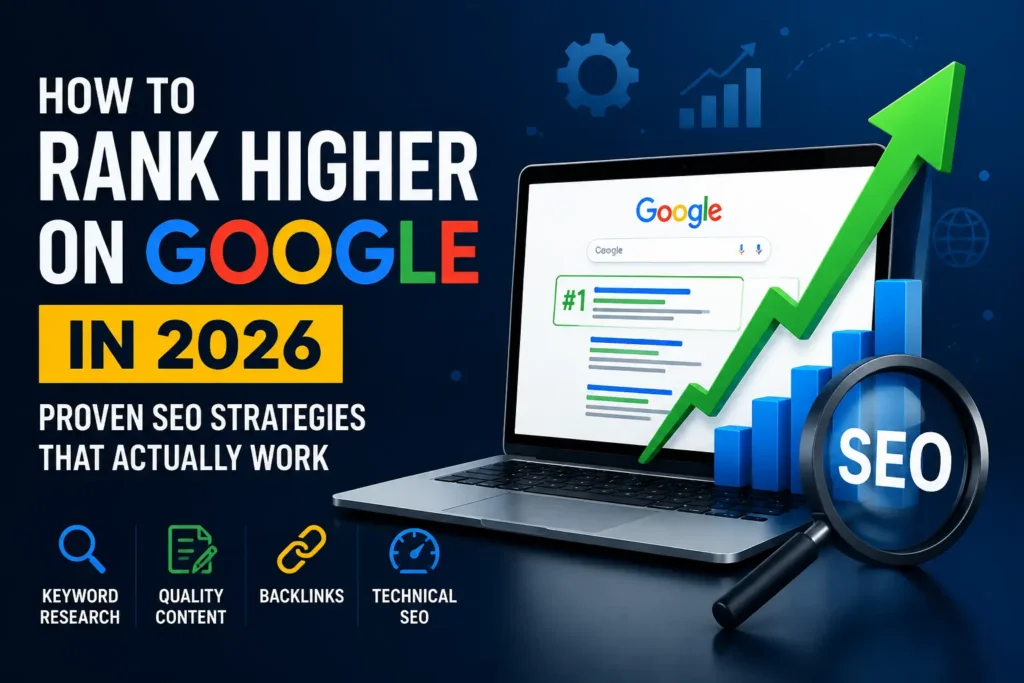
Search Engine Optimization (SEO) continues to evolve every year, and 2026 is no exception. With Google’s AI-powered search experiences, advanced ranking systems, and increasing focus on user intent, businesses need to move beyond outdated SEO techniques.
Today, ranking on Google’s first page requires a combination of high-quality content, technical optimization, excellent user experience, and genuine authority. Whether you own a local business, an eCommerce store, or a service-based company, implementing the right SEO strategies can significantly increase your online visibility and generate more qualified leads.
Here are the 15 most effective SEO strategies for 2026 that can help your website achieve higher rankings and sustainable organic growth.
1. Focus on Helpful, People-First Content
Google continues to reward websites that create content primarily for users rather than search engines. Every article, landing page, or service page should answer real questions, solve problems, and provide practical value.
Before publishing any content, ask yourself:
- Does this answer the user’s question?
- Is the information original and useful?
- Would someone bookmark or share this page?
Helpful content builds trust, improves engagement, and increases the likelihood of ranking well.
2. Understand Search Intent Before Targeting Keywords
Modern SEO is no longer about inserting keywords everywhere. Instead, understand why users are searching for a specific phrase.
Search intent generally falls into four categories:
- Informational
- Navigational
- Commercial
- Transactional
Create content that matches the user’s intent rather than simply targeting a keyword.
3. Perform Smart Keyword Research
Keyword research remains the foundation of every successful SEO campaign.
Use tools like:
- Google Keyword Planner
- Google Search Console
- Ahrefs
- SEMrush
- Ubersuggest
Target a mix of:
- Primary Keywords
- Long-Tail Keywords
- Local Keywords
- Question-Based Keywords
Long-tail keywords often generate higher conversion rates because they target users with specific search intent.
4. Optimize Title Tags and Meta Descriptions
Your title tag is one of the strongest on-page ranking signals.
A well-optimized title should:
- Include the primary keyword
- Stay under 60 characters
- Encourage users to click
- Clearly explain the page
Your meta description should summarize the content while naturally including important keywords and a compelling call to action.
5. Improve Core Web Vitals
Google continues to emphasize website performance.
Focus on improving:
- Largest Contentful Paint (LCP)
- Interaction to Next Paint (INP)
- Cumulative Layout Shift (CLS)
Fast-loading websites provide a better user experience and often achieve higher rankings.
6. Make Your Website Mobile-First
Most searches now happen on smartphones.
Your website should:
- Be fully responsive
- Load quickly
- Use readable fonts
- Have touch-friendly buttons
- Avoid intrusive popups
A mobile-friendly website improves both rankings and conversions.
7. Optimize Every Image
Images play an important role in both SEO and user experience.
Best practices include:
- Compress images
- Use WebP format
- Write descriptive filenames
- Add meaningful alt text
- Implement lazy loading
Optimized images improve page speed and accessibility.
8. Build Strong Internal Links
Internal linking helps Google understand the structure of your website while guiding visitors to related content.
Connect:
- Blog posts
- Service pages
- Case studies
- FAQs
- Contact page
A well-structured internal linking strategy increases page authority across your website.
9. Earn High-Quality Backlinks
Backlinks remain one of Google’s strongest ranking factors.
Focus on earning links through:
- Guest posting
- Digital PR
- Industry partnerships
- Original research
- High-value resources
- Shareable content
Avoid purchasing low-quality backlinks, as they can negatively impact your rankings.
10. Strengthen Your Local SEO
Local SEO is essential for businesses targeting customers in specific cities or regions.
Optimize:
- Google Business Profile
- Local citations
- NAP consistency
- Customer reviews
- Local landing pages
- Location-based keywords
An optimized local presence helps you appear in Google Maps and local search results.
11. Optimize for AI-Powered Search
Google’s AI-powered search experiences continue to change how users discover information.
To improve visibility:
- Answer questions clearly.
- Use structured headings.
- Create comprehensive content.
- Include FAQs.
- Add schema markup.
- Demonstrate expertise and trustworthiness.
Content that is easy for AI systems to understand has a greater chance of appearing in enhanced search experiences.
12. Publish Fresh Content Regularly
Search engines prefer websites that remain active.
Regularly publish:
- Industry news
- Educational blogs
- Case studies
- SEO guides
- Service updates
- FAQs
Updating older articles with fresh information can also improve rankings.
13. Implement Structured Data (Schema)
Schema markup helps search engines better understand your content.
Useful schema types include:
- Organization
- Local Business
- Article
- FAQ
- Breadcrumb
- Review
- Service
Structured data can increase your chances of appearing in rich search results.
14. Track SEO Performance
Monitor your SEO efforts using:
- Google Search Console
- Google Analytics
- Ahrefs
- SEMrush
Track metrics like:
- Organic traffic
- Keyword rankings
- Click-through rate
- Conversions
- Bounce rate
- Indexed pages
Regular analysis helps identify opportunities for improvement.
15. Stay Updated with Google’s Latest Algorithm Changes
Google updates its ranking systems regularly.
Instead of chasing shortcuts, focus on:
- High-quality content
- Technical SEO
- Strong user experience
- Website security
- Authoritative backlinks
- Continuous optimization
Long-term SEO success comes from consistently improving your website rather than relying on temporary tactics.
Common SEO Mistakes to Avoid
- Publishing thin content
- Keyword stuffing
- Ignoring mobile optimization
- Slow website speed
- Broken links
- Duplicate content
- Poor internal linking
- Missing meta tags
- Low-quality backlinks
- Not updating old content
Frequently Asked Questions
How long does SEO take to show results in 2026?
SEO is a long-term investment. Most websites start seeing meaningful improvements within three to six months, depending on competition, website quality, and consistency.
Is AI replacing SEO?
No. AI is changing how search engines display information, but SEO remains essential for improving visibility, authority, and organic traffic.
Can small businesses compete with large brands?
Yes. By targeting local keywords, creating high-quality content, and optimizing for local SEO, small businesses can successfully compete in search results.
Does website speed still matter?
Absolutely. Fast-loading websites provide a better user experience and continue to be an important ranking factor.
Final Thoughts
SEO in 2026 is about creating exceptional user experiences, producing genuinely helpful content, and maintaining a technically optimized website. Google’s ranking systems increasingly reward businesses that demonstrate expertise, authority, and trust while meeting users’ needs.
By consistently applying these proven SEO strategies, your website can achieve higher rankings, attract more qualified traffic, and generate long-term business growth.
Ready to Grow Your Business Online?
At Digital Marketing Company Mohali, we specialize in SEO, Local SEO, Google Ads, Social Media Marketing, Website Development, AI Marketing, and Digital Growth Strategies that help businesses increase traffic, generate qualified leads, and improve search rankings.
📞 Contact us today for a FREE SEO consultation and discover how we can help your business rank higher on Google in 2026.
Call : +91 85808-92163
Email : info@digitalmarketingcompanymohali.in